

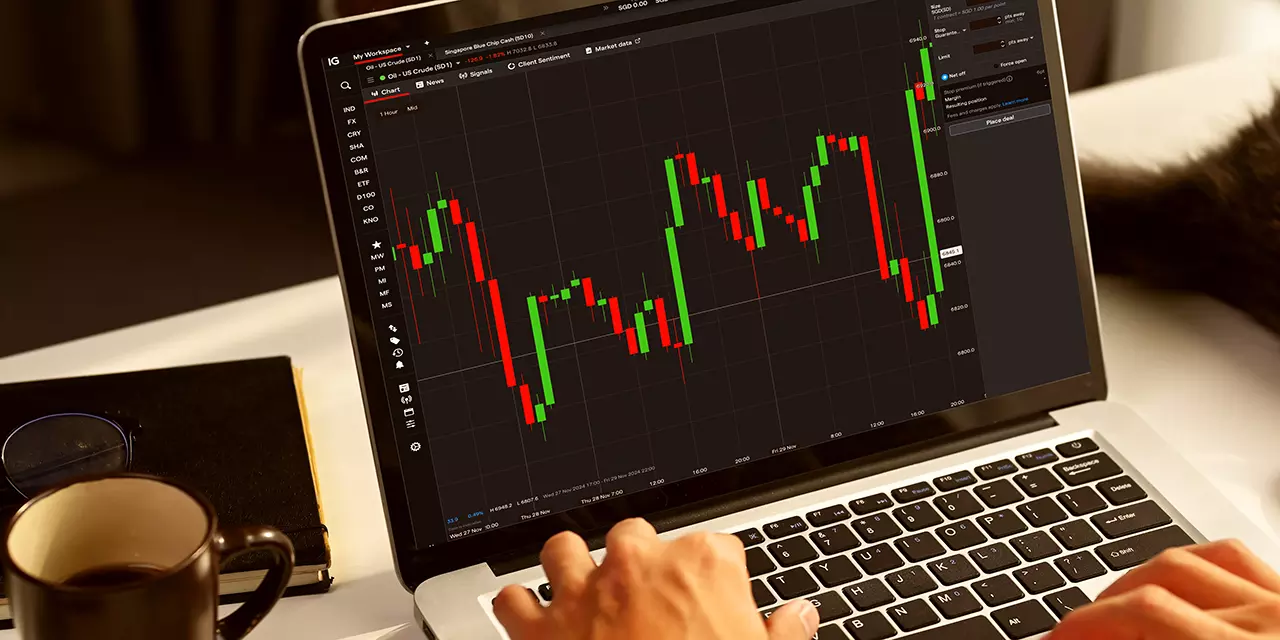
People who are new to trading found the foreign exchange market which operates through international currency fluctuations to be an attractive option for making money. The dynamic market requires traders to learn essential trading concepts which include what is leverage in trading and the process of initiating forex trading. The guide presents both concepts through a straightforward and practical demonstration.
What Is Leverage in Trading
Trading leverage enables traders to borrow funds from brokers which they need to expand their trading operations. Traders can manage substantial funds through leverage because they only need to make a minor financial commitment which is called margin.
For a broker who provides 1:100 leverage, customers need to invest $100 in order to operate $10,000 worth of market assets. This method produces enhanced profit opportunities but it also creates higher chances of financial loss.
How Leverage Works in Forex Trading
The concept of leverage in trading requires both theoretical knowledge and practical understanding of its operational mechanisms. Traders need to keep a margin which functions as their security deposit requirement.
When you open a trade with $1,000 at 1:100 leverage your margin requirement decreases to $10. The broker provides the remaining amount. Your profits from the trade will be based on the entire $1,000 amount because the trade moves in your favor.
Your losses from the market movement will also be calculated on your entire position size. Traders who use leverage need to establish risk management systems because they need to protect themselves from potential losses.
Benefits and Risks of Leverage
The process of understanding leverage in trading needs traders to study both its benefits and its drawbacks.
The main benefit is the ability to maximize profit with a small investment. Traders who lack capital get an opportunity to make larger trades which provide them with a chance to achieve greater profits.
The risk exists because of excessive market exposure. Many beginners lose money quickly because they use high leverage without proper knowledge or strategy. The combination of emotional trading and leveraged positions results in traders experiencing quick financial losses.
The path to long-term success requires traders to use leverage responsibly while implementing effective risk management strategies.
How to Start Forex Trading
After learning about leverage in trading, beginners should proceed to their first step in forex trading. The practice of forex trading requires traders to buy one currency while they sell another currency, which enables them to earn profits through changes in exchange rates. The forex market functions continuously throughout the day, making it one of the largest financial markets that exist in the world.
To start forex trading, traders need to complete three essential steps, which include developing their discipline and market comprehension.
Step 1: Learn the Basics
Education serves as the first requirement which beginners and traders must fulfill to learn how to start forex trading. You need to understand currency pairs, pips, spreads, leverage, and market trends. Trading activities turn into gambling when traders lack basic knowledge because they cannot make informed decisions.
Beginners should also learn about fundamental and technical analysis, which help predict market movements. The selection of a trustworthy forex broker represents a key decision in the process of choosing a forex broker. A good broker provides a user-friendly trading platform, competitive spreads, and proper regulation.
The broker must provide a demo account, which enables you to practice trading without any financial risks. This serves as the essential first step that every newcomer must complete.
Step 2: Open a Demo Account
A demo account allows you to practice how to start forex trading in real market conditions without financial risk. The training program shows you how to execute trades while showing you which tools and methods leverage to establish control over your trading positions. The process enables you to gain confidence while testing multiple strategies before you start making actual investments with your money.
Step 3: Develop a Trading Strategy
Successful traders do not rely on luck. They follow a well-defined trading strategy which combines analysis with risk management.
Your strategy should include entry and exit points together with risk tolerance and position sizing. The document should establish your procedures for safe leverage implementation.
The essential requirement for sustained profits depends on maintaining consistent strategic performance.
Step 4: Start with a Small Investment
You should begin your real trading transition after using a demo which requires minimal financial commitment. The approach decreases risk while enabling you to acquire authentic trading knowledge.
Beginners should start with low leverage instead of using it for their first trades. You should prioritize gaining knowledge instead of trying to achieve rapid financial success.
Step 5: Manage Risk Properly
Risk management stands as a vital element in starting Forex trading. Traders should establish stop-loss orders as a method to control their maximum loss potential.
Traders should limit their capital risk to a minor portion of their account balance during each trade. This approach protects your account against substantial financial setbacks.
Step 6: Keep Learning and Improving
Forex trading requires continuous acquisition of new knowledge. Market conditions require strategies to undergo necessary adjustments. You should evaluate your trading activities at regular intervals to identify areas for improvement.
Successful traders dedicate their time to mastering new skills while they track ongoing market developments.
Conclusion
Traders need to understand leverage before they start trading in the forex market. Traders who use leverage effectively can increase their profits yet face substantial risks when they do not handle it properly.
The process of learning forex trading requires beginners to start their training by following a step-by-step guide. Each step from basic knowledge to risk management training serves as an essential component for traders who want to achieve success.

Leave a Reply